Freedom, Power and Safety
Who Gets to Speak in Creative Education?
In the second of our FACE Talking series: Freedom, Safety and Power, FACE welcomed Kevin Coutinho MBE and Cardiff Met academic Nada Koresh for critical discussion on freedom of speech in creative higher education. The following report examins how recent legislative changes create competing institutional duties and disproportionately impact minoritized staff and students.
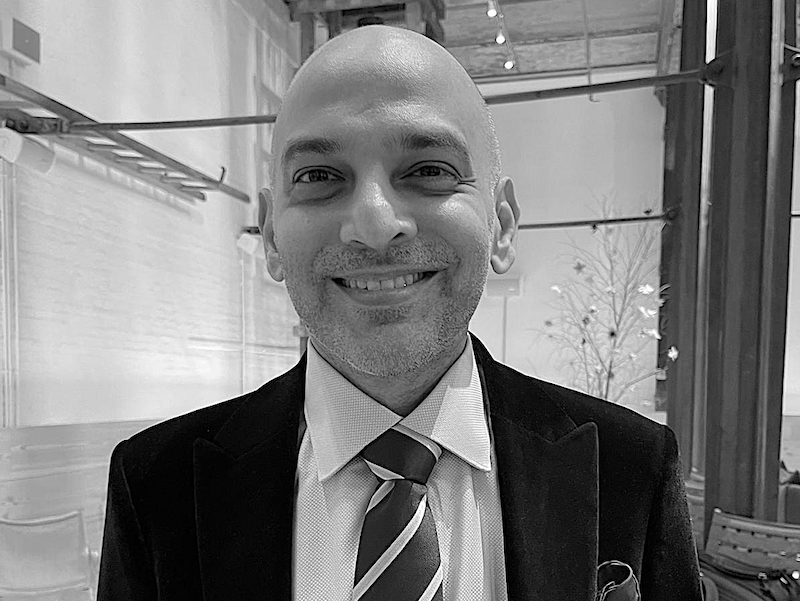
Kevin Coutinho MBE: UK equalities practitioner, independent governor Cardiff Metropolitan University, Athena Swan/Race Equality Charter Panel Chair, Chair of Trustees Windsor Fellowship, Council member, British Science Association and Adviser, University of Galway and Trinity College Dublin. Goan (Indo-Portuguese) heritage.
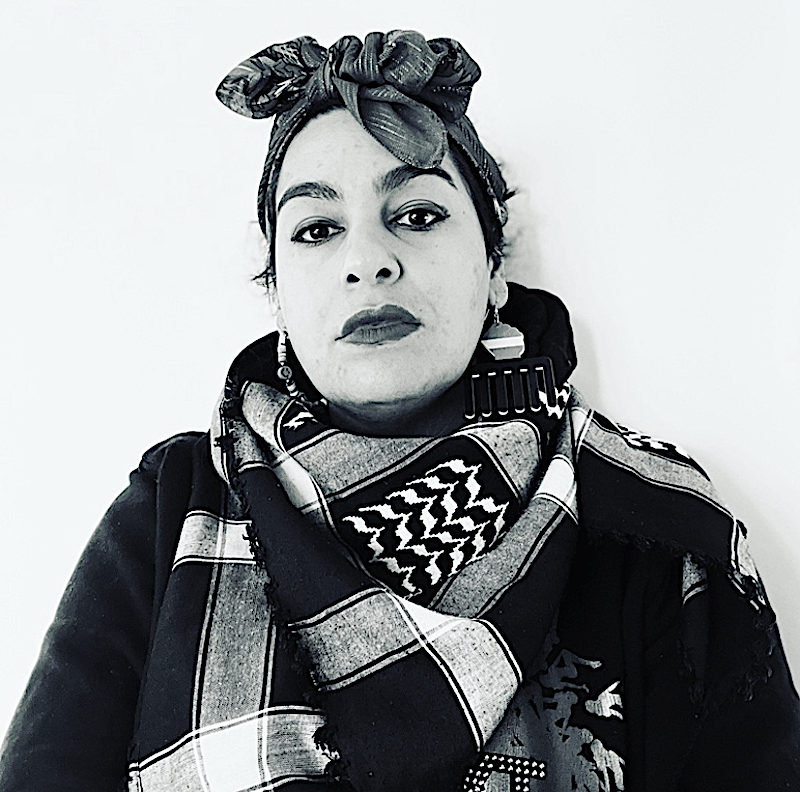
Nada Koresh: Decolonial scholar, fashion and interdisciplinary lecturer at Cardiff School of Art and Design, cultural disruptor/founder Liberation collective(formerly fashion liberation collective) co-curator of KSUM exhibition “a meeting of cultures : fashioning north Africa”. Of Egyptian heritage, UCU representative.
New Regulatory Framework
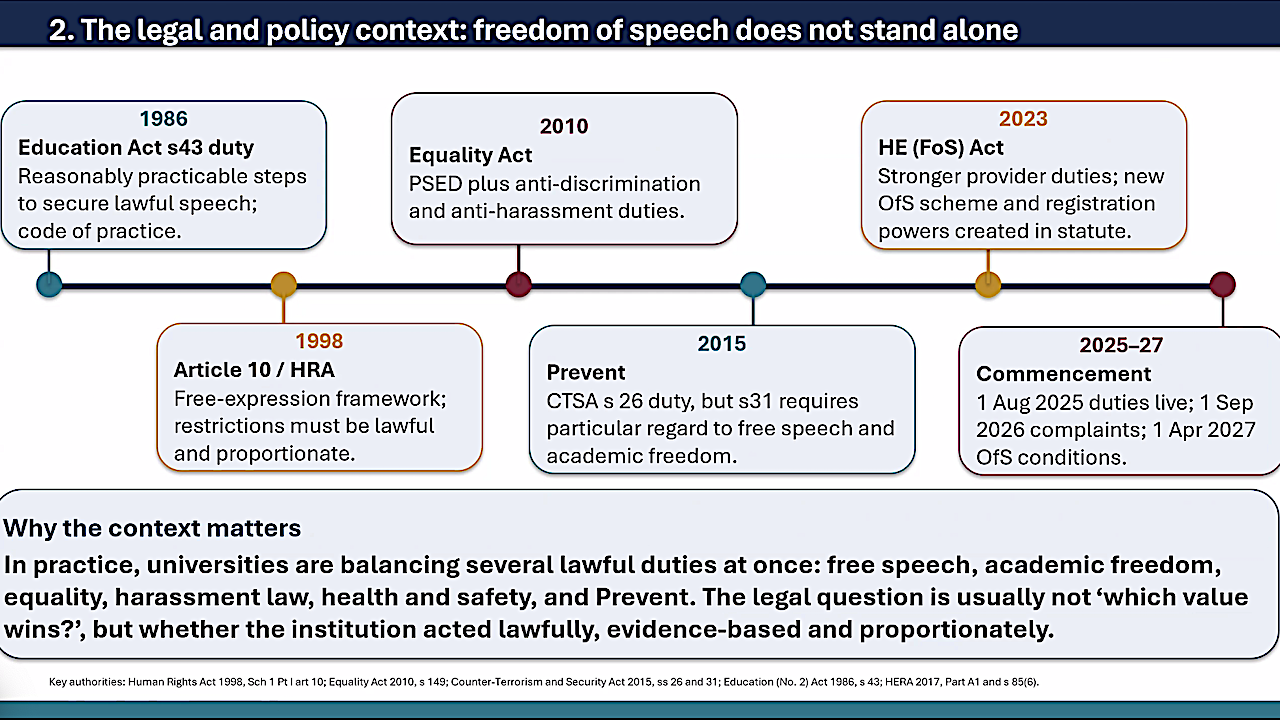
Higher Education Freedom of Speech Act introduces independent complaints process for staff and external members (not students) with potential fines of £500,000 or 2% of income, whichever is higher, effective April 2025.
New Office for Students Condition on freedom of speech joins existing Condition E6 on harassment prevention, creating competing compliance requirements 5
Institutions must balance freedom of speech duties against Equality Act obligations, Prevent duty requirements, and health and safety law—no single duty legally supersedes others.
The "Suspension Bridge" Framework
Kevin Coutinho presented freedom of speech as a suspension bridge metaphor: institutions must balance academic freedom and free expression on one side against equality protections, harassment law, and prevent duties on the other, with all duties holding equal legal weight.
Key Distinctions: Academic Freedom vs Freedom of Speech
Academic Freedom (for teaching/research staff only):
· Protects questioning received wisdom and pursuing unconventional thinking
· Guards against job loss and privilege loss
· Institutional duty to promote it as part of academic mission
· No immunity from equality, harassment, or employment law
Freedom of Speech (broader application):
· Covers expression, events, publications, campus associations
· Applies to all community members
· Must remain lawful—but "lawful" remains poorly defined for everyday practitioners
· When there is doubt, self-censoring and over-regulation of activity creates a ‘chilling effect.’
Hierarchy of Enforcement
Institutions rapidly adopted data protection compliance due to fine risk. New freedom of speech fines will likely receive similar priority. Meanwhile, race equality, disability, and sexual orientation obligations receive comparatively minimal enforcement attention despite equal legal standing. More from Kevin further down.
*
Lived Experiences of Constraint
Nada's Experience: Curriculum Scrutiny
Module content challenged: Teaching "Wokeness and Decolonizing Practice" faced management intervention, with module name changed,to remove terms like "Stay Woke" and "violent death of wokeness." This was the only module required to change its name.
Keffiyeh incident: After October 2023, Nada was questioned by senior staff, outside the school of art and design, as well as some of the policy/legal services team. about teaching appropriation/appreciation using keffiyeh examples in fashion content, previously taught for years without issue. These bodies inquired why the topic needed discussion, despite it being a clear pedagogical example of cultural appropriation principles and the why behind it. Comments were made by the legal entity that due to Nada wearing the Keffiyeh during lectures, it would be seen as having a specific political opinion, and leaning heavily towards one perspective, so to be safe Nada would take the keffiyeh off during these sessions. It has been stated on a wider university level or stressed upon that everything we teach has to have a purpose and reasoning of WHY that specific example, and justification of how this ties into a specific module. All of which is valid but seemingly stressed upon a lot more.
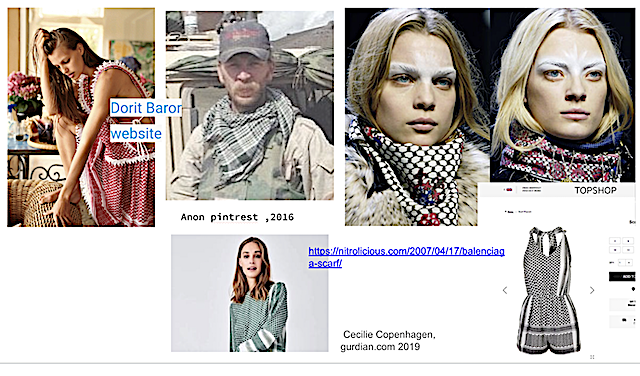
Personal presentation policed: Wearing a keffiyeh (part of Nada's attire since age 8) was framed as creating bias, with assumptions that her identity predetermined her teaching content rather than her scholarly expertise.
PhD ethics weaponized: Required to apply for ethics approval to write an autoethnographic chapter involving no participants. After ethics board confirmed no approval needed, supervisors opposed this decision, stating approval was necessary because Nada might "offend someone" due to being "so direct"—a requirement other colleagues were not subjected to.had the reason been framed differently ,then maybe this would have been appropriate, but there is an assumption or narrative of the angry brown woman.
Solidarity posters blocked: Attempt to display posters supporting global majority students after Jamaica hurricane and rising Islamophobia was met with claims that Nada's mere presence and that of others wearing keffiyehs made white academics uncomfortable and unsafe, unable to express views on "illegal immigration." Also wether a show of vocal solidarity was needed, since the students know that there are support services and staff. The need to show support or a simple “ we are here for you” was batted back , as it could be seen as taking a certain side or stance. There were also questions around even nadas own experience ie” why ? do you not feel safe?” “ have students said that to you?” “ in what context?” also comments like this campus is very safe, Cardiff is very safe we are not affected to the same degree as other places. But mainly the issue being the lack of acknowledgement, going on to say that the far right RACIST riots awere protests againstillegal immigration, and that one could say that the peaceful pro Palestine protest were antisemitic and be labelled as terrorists and violent. I feel watched and surveyed rightfully so after the elgjezeera article, I feel pacified, as in lets keep her quiet, micro aggressions used as a form of silencing and erasure, as I feel unsupported and completely isolated.
Strategies for Navigation
More from Kevin Coutinho
Individual Protection Mechanisms
Documentation as shield: Link every teaching session to learning outcomes, assessment criteria, and personal/industry expertise. Maintain clear records of pedagogical rationale for all content—this becomes protection against unfounded accusations.
Ground rules first: Establish clear codes of conduct and engagement rules before starting courses to create framework for respectful disagreement, rather than responding mid-crisis.
Values alignment: Assess personal values against institutional values regularly—persistent misalignment becomes untenable and requires strategic decision-making about sustainability.
Multiple income streams: Maintain "other strings on your bow" to reduce dependence on hostile environments, create exit options when needed and nourish yourself with positive counterpoints in increasingly challenging mainstream environments.
Collective Approaches
Union representation: UCU involvement provides structural protection and documentation support when facing institutional scrutiny.
Nothing about us without us: Trans and other minoritized voices must be included in conversations about policies affecting them—not having two sides debate while erasing the affected community.
Student inclusion in dialogue: Creating classroom space for students to connect lived experiences with their work builds peer tolerance and relatability, making abstract issues concrete.
Recommendations for Institutions
Immediate Actions
· Apply freedom of speech principles consistently across all identities and viewpoints, not selectively based on who expresses discomfort or politically influenced prioritisation (and de-prioritisation).
· Distinguish between genuine safety concerns and fragility responses to difference.
· Provide clear, practical guidance on "lawful speech" boundaries for everyday teaching scenarios.
· Stop requiring minoritized staff to justify pedagogical choices that colleagues teaching dominant perspectives never face.
Systemic Changes
· Recognize that making mistakes is human—institutional responsibility lies in acknowledging mistakes, understanding their impact, and changing behaviour, not in defensiveness.
· Create belonging where "everybody can thrive and flourish," not just those from dominant groups.
· Allocate resources (time, money, enforcement) proportionally across all legal duties—equality, harassment prevention, and freedom of speech—rather than prioritizing based on fine risk or political expediency.
Structural Challenges
Power Asymmetries
Minoritized staff (Black, Brown, queer, disabled, economically disadvantaged) experience "voicelessness factors"—less likely to exercise freedom of speech and less likely to be protected when they do. Power distributions in institutions remain highly asymmetrical.
The "Polite Nastiness" Problem
Sophisticated intellectualization of discriminatory views in academic environments makes harm harder to identify and address than overt racism. The shift from blunt to subtle discrimination creates "psychological insecurity" where targets constantly second-guess motivations.
General Discussion
The "Lawful Speech" Problem
Practitioners lack clear guidance on what constitutes "lawful" speech, creating constant uncertainty and self-censorship. The law creates "abstract" categories (e.g., binary sex ruling) that don't reflect lived complexity, leaving both gender-critical feminists and trans communities feeling threatened.
Broader Pattern of Targeting Disproportionate scrutiny
Recent investigations have revealed that multiple UK universities paid a private security firm with military intelligence links to monitor student protests and academic activity, including social media surveillance and background checks on invited speakers. These practices have implications for creative disciplines such as fashion and the arts, where political expression—through dress, symbolism, and visual culture—is often central to teaching and research. In this context, the scrutiny of Palestine-related content, imagery, or cultural references (for example, discussions of appropriation, textiles, or dress such as the keffiyeh) cannot be separated from wider institutional responses to protest, risk, and reputational management.
Police involvement: Institutions bringing police on-site and threatening to arrest students protesting in support of Palestine.
Link: British Universities pay to spy on pro palestinian students.
Trans rights workshops cancelled: Following Sussex University's £500,000 fine, one institution immediately dropped two workshops addressing trans rights attached to a staff exhibition—demonstrating the immediate ‘chilling,’ effect of financial penalties.
Institutional Inconsistencies
Selective Application of Principles
· Monetization threshold: Minoritized staff experiences and expertise ignored until institutions identify market value—then suddenly welcomed for recruitment but not permitted critical expression.
· Fragility protection: White staff discomfort treated as safety issue requiring institutional intervention, while minoritized staff facing actual harassment told existing policies are sufficient.
Critical Questions Raised
On consistency: If institutions wouldn't accept the argument that "Black people's presence makes white people leave," why is the same logic acceptable for trans inclusion or keffiyeh-wearing?
On academic freedom: How should institutions navigate claims of academic freedom when research topics or methodologies risk reinforcing racialised hierarchies or causing harm to specific groups?
On institutional responsibility: What duty do institutions have to staff being targeted by external organizations, and how do they balance this against freedom of speech claims?
The session revealed systemic inconsistencies in how institutions apply freedom of speech principles, with global majority academics facing heightened scrutiny while expressing fragility from privileged groups receives institutional protection.
This is the second in a short series. See our first talk: Joy Curiosity and Connection
Ends.