Mind the Gap
Join us 30th October at the London Metropolitan University for a FACE screening of Ricardo Barker’s latest feature, Mind The Gap (2025). (Eventbrite link below.) The film explores race bias in higher education through satirical drama and is co-created with students and staff at Leeds Trinity University where Ricardo is Associate Professor in Professional Practice.
Recognised with the Best Presentation Award at the British Educational Research Association (BERA) 2024, Ricardo’s practice-as-research continues to shape policy, pedagogy and public dialogue.
Want to screen the film in your institution? Download the follow up Action Resource Pack here.
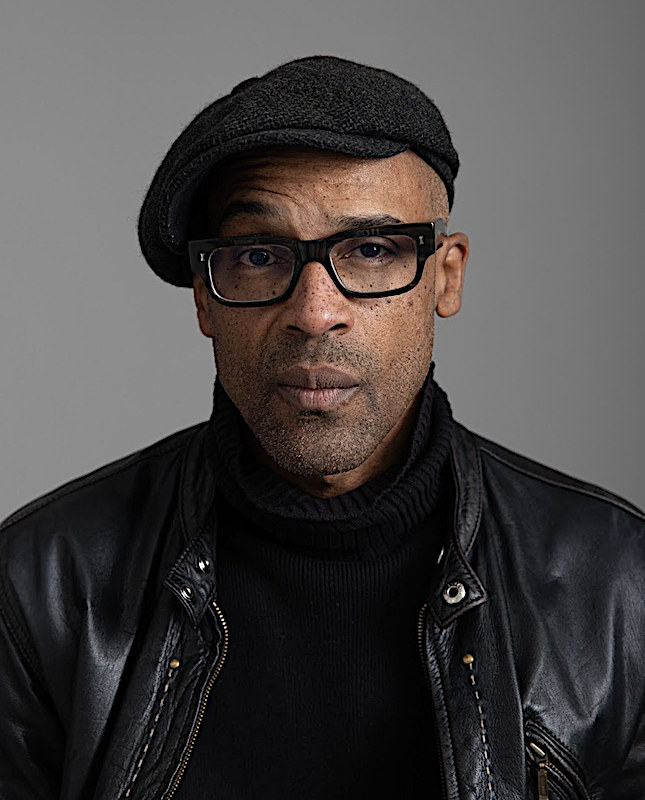
Ricardo Barker is Associate Professor in Professional Practice (Filmmaking) at Leeds Trinity University and a member of the International Research Centre for Interactive Storytelling (IRIS). An award-winning filmmaker, his research integrates practice-based film production with critical pedagogy and co-creation.
His short film Re:Tension (2020) addressed institutional racism in higher education, screening internationally and leading to the national Re:Tension Toolkit, now used by UK universities. The film contributed to Leeds Trinity winning the 2021 Whatuni Diversity and Inclusion Award.
In 2023, Ricardo directed Where Is The Line? in partnership with UK Coaching, Sport England, and CPSU. The film underpins the UK Coaching Duty of Care Training Package, a nationwide safeguarding resource.
Full details of screening and Eventbrite link below.
“I’d been thinking about making a film to highlight the ongoing awarding gap for a while,” says Ricardo. I wanted to explore what the research findings tell us as an informative documentary.
“The audience I want to engage, is predominantly white academics.”
Having made a film Re:TENSION from a Black male student’s point of view, I’ve switched. I wouldn’t be telling students of colour anything that they didn't already know. The audience I now want to engage, is predominantly white academics. Those who, when training takes place, are reluctant to turn up. They've got other priorities. Or out of five sessions, they'll make only one or two. My challenge is to communicate with them.”
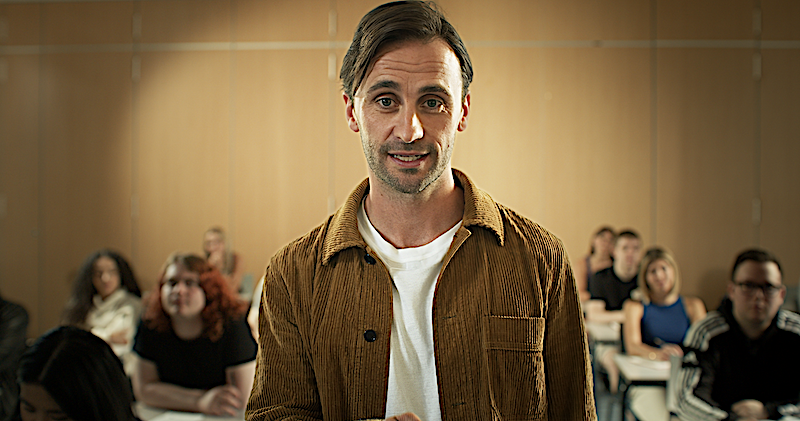
But how can I be biased? Central character and senior lecturer Daniel. Mind the Gap (2025)
“I know them. I know they're not bad people. Everybody has a different perspective. Common amongst these are: The whole thing is just too big. I feel really small and inadequate. Or Just tell me what I need to do, and then I'll go off and do it. And of course there is still… Why are we still banging on about this race and gender thing?”
I envisioned a really relatable character, aware of issues such as racism, sexism or homophobia, but unable to see themselves as capable of these biases. Being called out for racism for example, would cause a meltdown to someone like this. It’s this storyline that would allow for the humour. Depicting someone as more overtly racist would have limited me to a dramatic narrative only.
“It’s this storyline that would allow for the humour. Depicting someone more overtly racist would have limited me to a dramatic narrative only.”
“It’s the person you would least expect to be called out because they're popular and really cool. How does the person who finds themselves in this situation, handle it? I was curious to explore that conflict unfolding.”
“And this is where it gets really contentious and particularly interesting. The aggressive form and face of racism is packaged as the only way racism presents. But it’s the disengagement, or lack of engagement or with the racism, that becomes a hostility in itself.”
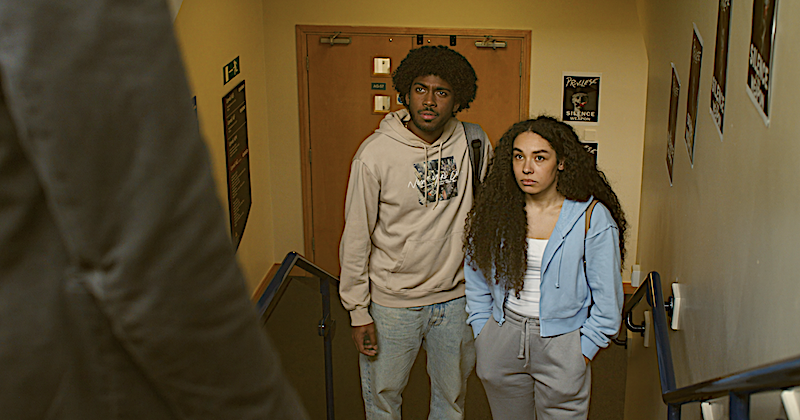
Does the Awarding Gap mean our marks will be lower? Pupils Quinn and Aysha. Mind the Gap (2025)
“It's about patterns. How do you engage an individual with no experience of the issue? My main character Daniel didn't recognise his own privileges. Yes, there were class bias challenges from his past that he had worked hard to overcome. He left friends behind because they couldn't assimilate into the aspirational world he had entered. His position became, ‘Well if I can anyone can.’”
“It can be triggering for those who don’t own their race privilege. I think it's important that that we are triggered. Otherwise, we can end up like Daniel, telling himself - ‘Look, I've done it my way. It worked for me. You're doing your way. We're a clique. We're good.’”
“The story has a surface trajectory about the awarding gap and institutional racism. Concurrently, it's also about tackling race bias. And that means taking the blinkers off.”
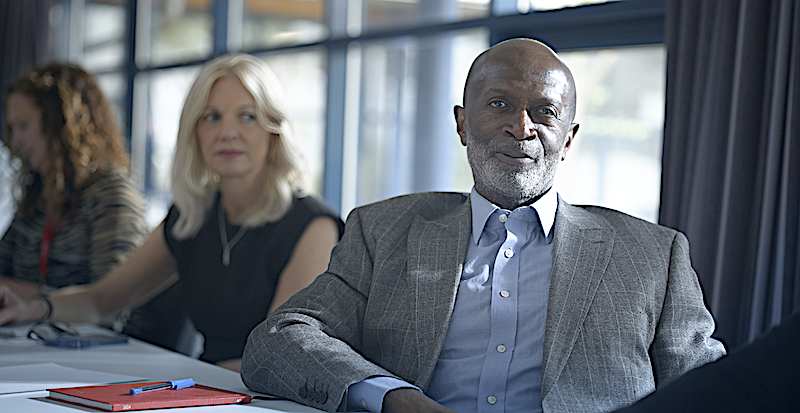
Look, we’ve been complaining about this issue for 20 years. Professor Marcus, Mind the Gap (2025)
“We can't follow the issues without fully and deeply, unpicking and unpacking race privilege. The story has a surface trajectory about the awarding gap and institutional racism. It's also about tackling race bias. And that means taking the blinkers off.”
“The film does not provide a comforting message of follow these tips, and you will not be racist or follow these rules, and we will have an anti-racist structure and anti-racist systems. You can't prescribe these things. I want each individual to make their own connections, their own changes and continually practice a new perspective with their blinkers off. That's where the change will come. It’s not a case of you throw the dart, you get a bullseye, and you fix this problem. This is a lot more complicated. This ongoing process is not going to win you friends, it may run the risk of alienating you within your community, because it is a completely different rhythm, and practice to what you have previously known. But there will be gains.”
“This has been my challenge. As a film maker it's a lot easier to tell a very complex story by reducing it to a binary.”

A new class: Hopes, dreams and bias interrupted? Mind the Gap (2025)
“This has been my challenge. As a film maker it's a lot easier to tell a very complex story by reducing it to a binary. But this can lead to a simplistic division. We end up focusing on, an over simplified argument. It’s the mindsets we need to focus on. Challenging each and every viewer to reflect on their mindset for personal evolution and collective progress is something I hope I have achieved.”

Mind the Gap 5pm, 30th Oct 2025. At the London Metropolitan University
Screening Theatre,
Main Site - Holloway Campus 166-220 Holloway Rd, London N7 8DB. Nearest Tube: Holloway Road (Northern
Eventbrite sign up here.
Research Mark Hall. Report Caryn Franklin.