Shadow Scholars
In this compelling documentary (stream The Shadow Scholars on Channel 4 now) Oxford academic Professor Patricia Kingori explores Kenya's shady, multi-billion-dollar fake-essay industry, where educated Kenyans anonymously write papers for students around the western world. FACE speaks to writer and director Eloise King and researcher, presenter and Oxford University professor Patricia Kingori.
Report Caryn Franklin.
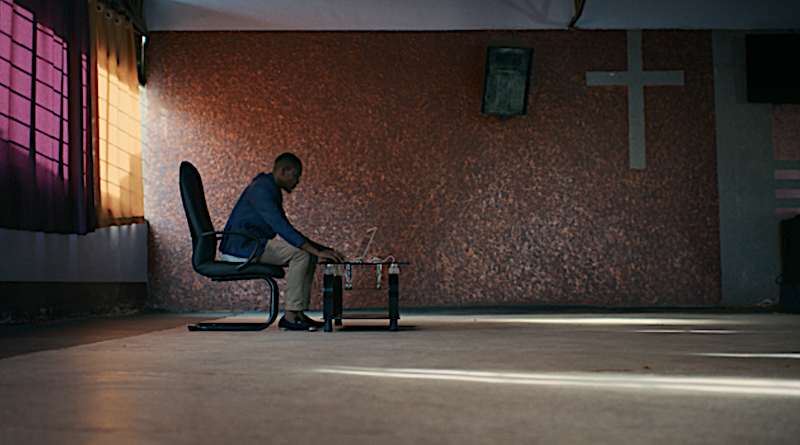
Of all the online labour undertaken in Kenya, 72% involves academic writing for the global north.
Eloise - What powered and sustained you in the making of this film.
"I found a deep, personal resonance with the subject. As a Black woman of Caribbean heritage raised in London, I was taught I could be anything, with one crucial caveat: “You will always have to work twice as hard” as our white counterparts. Learning about Kenya’s ‘shadow scholars’ - educated writers completing assignments for Western students - magnified the systemic injustice on a global scale. The rhetoric that “knowledge is power” is common in the global north; I wanted to investigate for whom, exactly, this power is reserved.”
“The rhetoric that “knowledge is power” is common in the global north; I wanted to investigate for whom, exactly, this power is reserved.”
“As the daughter of a Jamaican immigrant mother whose generation was wrongly classified as ‘educationally subnormal’ by the British school system, I witnessed how colonial hierarchies of knowledge limit potential and close doors to opportunities. Like the Kenyan writers, my family clung to the unshakable truth that education is both a weapon and a sanctuary against systemic violence. Working multiple jobs to put myself through university as the first in my family to access higher education, I understood the relentless commitment required to navigate a system that resists you.”
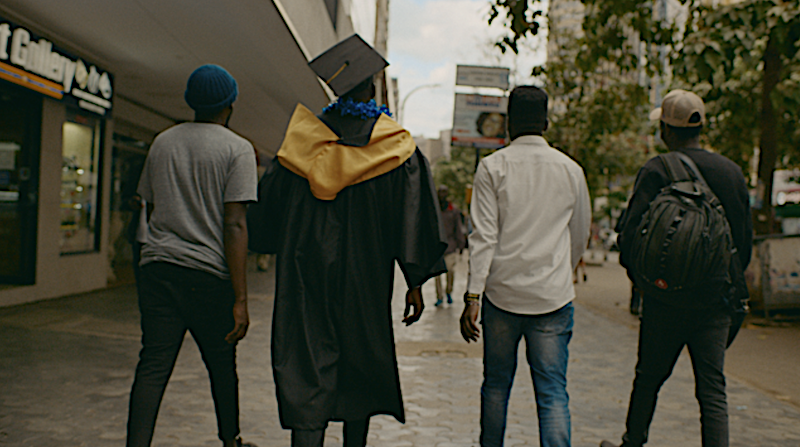
To engage in a bidding system for an essay commission, Kenyan academic writers must create white friendly profiles by changing their names and appearance.
“In the shadow scholar industry, I saw this paradox on a global scale: brilliant minds are commodified by the very systems that exclude them.”
“In the shadow scholar industry, I saw this paradox on a global scale: brilliant minds are commodified by the very systems that exclude them. Patricia Kingori’s research on ‘fakes, falsehoods, and fabrications’ crystallised this, revealing how western academia extracts intellectual labour from the global south while denying it’s possible for the creators to be African. This project became a way to interrogate these contradictions not just as systemic failures, but as lived realities connecting my mother’s generation, my own journey and Patricia’s experience and the Kenyan writers’ determination to reclaim their place in the story of knowledge. It highlights the immense labour that creates the conditions for others to succeed.”

Patrica Kingori, youngest ever professor for Oxford University, travels to Nairobi to research this phenomenon.
Patricia - How can we challenge the exploitation of Kenyan academics by white western students?
“I think that questions of race, exploitation and institutional practice are complicated and interesting in equal measure.
My research set out to explore the power dynamics and ethics at the heart of what is called the “fake essay” industry. I resisted labelling it as exploitation or viewing the academic writers for hire in Kenya as victims because I wanted to understand the world and how they view it.
From their perspective, they are supplying the global north with a service that is in demand and at the time of research and filming meant that they got paid very well for doing so. I think that because they were getting paid they rarely used the word exploitation. Many choose to and were happy doing the work and wanted more of it.”
“Some of my work explored the idea of an ‘empty choice’ where people make choices but from very limited options and I saw this very much among the unemployed Kenyans I spoke to, writing for students was an empty choice.”
“Some of my work explored the idea of an ‘empty choice’ where people make choices but from very limited options and I saw this very much among the unemployed Kenyans I spoke to, writing for students was an empty choice. Of course just because something is happening does not mean that it should be happening but to reconcile this issue means looking at where the demand is coming from and why. That shifts the question onto institutions in the global north, many of whom do not want to recognise this issue because to acknowledge this is happening is to confer responsibility to university and educational institutions when they don’t have a financially viable solution to it. I think that the economics and industrialisation of education are crucial to this issue.”
“In the UK, more than four in 10 universities are facing bankruptcy by the end of this year. They are not in a position to punish students or throw them off courses when they need their money.”
“In the UK, more than four in 10 universities are facing bankruptcy by the end of this year. They are not in a position to punish students or throw them off courses when they need their money. So much of this is strategically ignored. I think that any change needs to come from collective reflections about what are young people in the global north being educated to do, it requires going back to the drawing board and asking questions about what is the value of education and what should it be.”
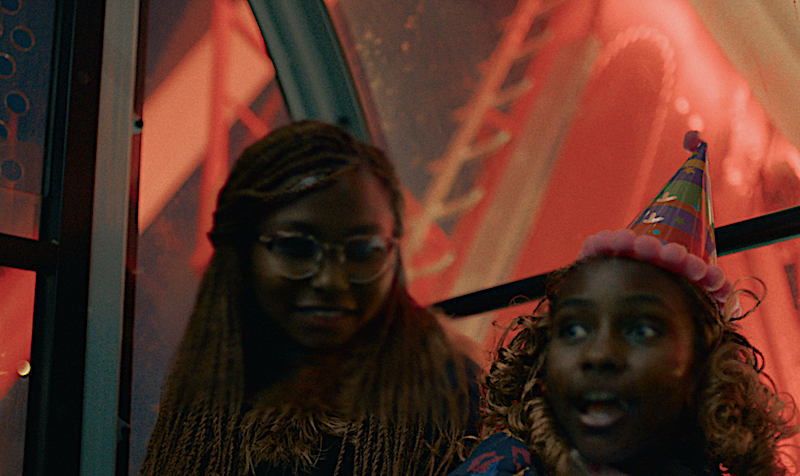
Mercy writes to tight deadlines. Two masters essays on two different subjects, in just 12 hours, while her daughter sleeps.
Eloise - what impact do you hope this film will make?
“I hope for reckoning. The film subverts the presumed superiority of prestigious global north institutions by showcasing the Kenyan writers’ intellectual and entrepreneurial prowess against-the-odds. It challenges dominant histories and invites us to reimagine collective futures, not by romanticising a past where “we were once kings in Africa,” but by making space for the modern reality of Kenya’s exceptional contributions, on their own terms. Crucially, the narrative does not frame its subjects as passive victims waiting on the hands-outs of an extractive system. Instead, it highlights their power as the architects and innovators of their own economic and ideological liberation."
“Instead, it highlights their power as the architects and innovators of their own economic and ideological liberation."
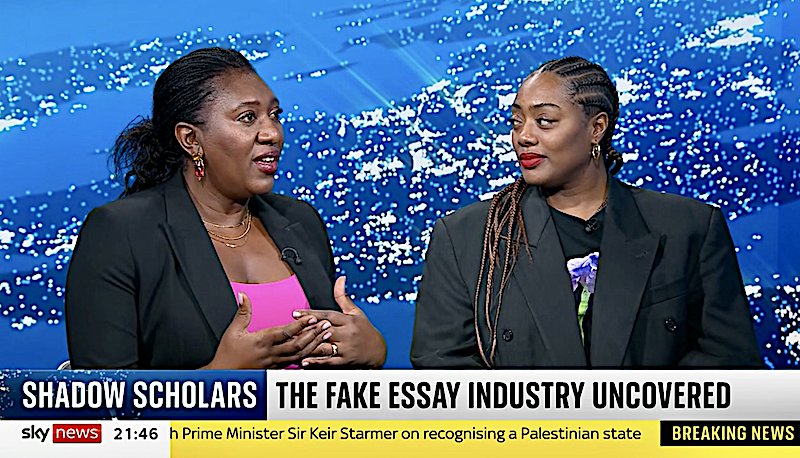
Professor Patricia Kingori and Eloise King discuss The Shadow Scholars on Sky News.
The Shadow Scholars. Based on research by Professor Patricia Kingori. Written, Directed and Produced by Eloise King. Produced by White Teeth Films, Lammas Park. Producers: Anna Smith Tenser & Bona Orakwue, Tabs Breese.
FACE testimonials
A deeply moving and shocking documentary revealing how students’ desperation and systemic pressures fuel a shadow economy that seemingly goes unchallenged. Kingori’s calm yet incisive approach treated everyone involved with empathy while asking profound questions about ethics, privilege, and exploitation. The film’s blend of investigative depth and human storytelling left a lasting impression on me, challenging us all to rethink who benefits — and who is silenced — in the pursuit of academic success. Caryn Franklin, former visiting professor Kingston School of Art.
The Shadow Scholars documentary was powerful, enlightening, sad and very moving. At the end, I felt really both angry and dejected at the huge injustice that these supremely intelligent Kenyan academic writers endure. Without opportunities to progress in their homeland of Africa, they sell their incredible abilities to the rich and less able in the western world.
I am also now more than a little scared at the staggering numbers of graduates in the global north (37 million!) who have gained their degrees through the work of someone else. Many of these people are now currently practising in fields of medicine, law, architecture, engineering and more without the substantial knowledge they should have. How do they sleep? Joyce Thornton, senior lecturer, University of Westminster.
I found The Shadow Scholars to be deeply disturbing and was shocked at the scale of the issue and at the injustice and continuing inequality of the academic structures that underpin a perfidious and uneven job market. Dr Mark Hall, education consultant.